
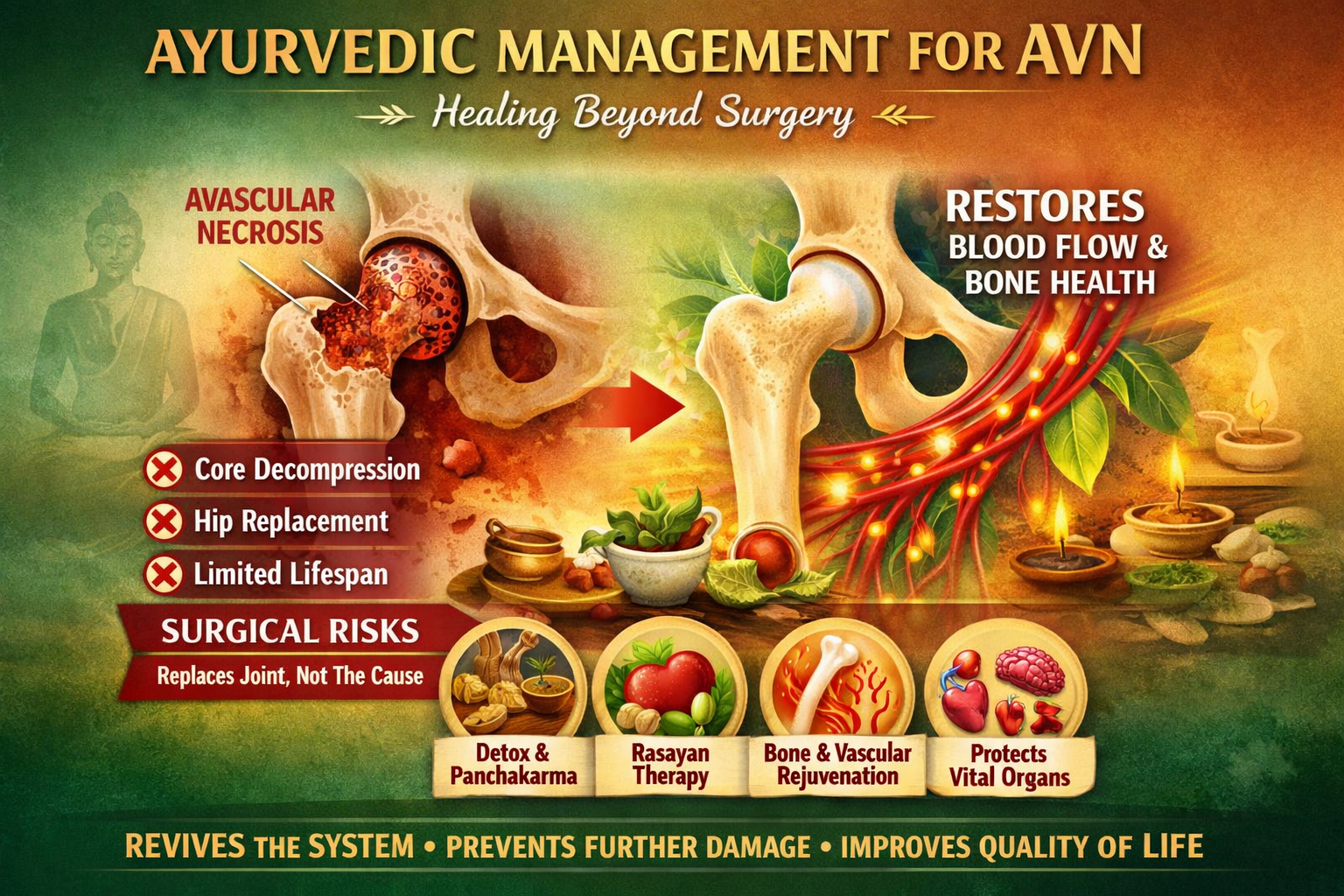
A Holistic Advantage Over Surgical Options
Avascular Necrosis (AVN) is a progressive bone disorder caused primarily due to compromised blood supply to bone tissue, most commonly affecting the femoral head of the hip joint. As blood circulation reduces, bone cells gradually die, leading to structural collapse, severe pain, restricted mobility, and eventual joint degeneration.
What makes AVN especially concerning is that it predominantly affects individuals in their productive age group (25–50 years)—professionals, working adults, and active individuals—often resulting in long-term disability if not addressed early.
While modern medicine largely focuses on surgical correction, Ayurveda offers a comprehensive, vessel-centric, tissue-rejuvenating approach that works at the root cause.
Understanding AVN from an Ayurvedic Perspective
Ayurveda does not view AVN merely as a bone disease.
It is understood as a complex pathology involving:
- Rakta Dhatu Dushti (vitiation of blood)
- Srotorodha (blockage of micro-channels and blood vessels)
- Asthi Dhatu Kshaya (bone tissue degeneration)
- Vata Prakopa (aggravated Vata causing degeneration and pain)
- Long-standing impact of steroids, alcohol, metabolic disorders, trauma, or autoimmune imbalance
Thus, AVN is not isolated to the hip alone—it reflects systemic vascular and metabolic compromise.
Why Surgical Options Have Limitations
Conventional management often includes:
- Core decompression
- Bone grafting
- Total hip replacement
Although surgery may provide structural relief, it has important concerns:
- Does not correct underlying vascular pathology
- Artificial joints have limited lifespan
- Revision surgeries may be required
- Not ideal for young or middle-aged patients
- No impact on future risk to other joints or vital organs
Surgery treats the end stage, not the disease process.
Ayurvedic Advantage: Treating the Root Cause
Ayurveda offers a distinct advantage by addressing the health of blood vessels and tissue nutrition, which is the core pathology in AVN.
Key Strength of Ayurvedic Management:
- Improves micro-circulation
- Restores blood vessel integrity
- Nourishes bone marrow and bone tissue
- Prevents progression and collapse
- Protects heart, liver, kidneys, and brain from long-term vascular damage
Ayurvedic Therapy Protocol for AVN
1. Shodhana Chikitsa (Detoxification Therapy)
Customized Panchakarma therapies help remove deep-seated blockages from micro-channels:
- Virechana – detoxification of blood and metabolism
- Basti (medicated enemas) – most important therapy for Asthi and Vata disorders
- Helps reopen obstructed circulation pathways
This step is crucial in halting further necrosis.
2. Rasayan Management – The Core of AVN Reversal
Rasayan therapy is the backbone of Ayurvedic AVN management.
It focuses on:
- Regeneration of damaged tissues
- Strengthening blood vessels
- Improving oxygen delivery to bone cells
- Slowing or reversing degeneration
Important Rasayan actions include:
- Rakta Prasadana – purification and nourishment of blood
- Asthi Poshana – bone and marrow rejuvenation
- Srotoshodhana – clearing blocked micro-circulation
Unlike painkillers, Rasayan works at a cellular level.
3. Herbo-Mineral Formulations (Under Expert Supervision)
Classical Ayurvedic formulations are selected based on stage, cause, and constitution:
- Improve bone density
- Enhance vascular tone
- Support marrow regeneration
- Reduce inflammation without damaging organs
When used judiciously, they are safe, effective, and long-term supportive.
4. External Therapies
- Abhyanga (medicated oil massage)
- Swedana (therapeutic fomentation)
- Localized basti or pichu therapies
These help reduce pain, stiffness, and improve joint mobility naturally.
Preventing Damage to Core Vital Organs
One of Ayurveda’s greatest strengths is its preventive vision.
AVN reflects systemic vascular weakness, which—if ignored—may later affect:
- Heart (ischemic tendencies)
- Liver (fatty changes, toxicity)
- Kidneys (microvascular damage)
- Brain (circulatory insufficiency)
Ayurvedic therapy strengthens entire vascular health, not just the affected joint—thereby preventing future complications.
Who Benefits Most from Ayurvedic AVN Management?
Ayurvedic treatment shows best outcomes in:
- Stage I and Stage II AVN
- Early Stage III (before collapse)
- Patients advised surgery but wanting conservative management
- Post-surgical patients to prevent further joint involvement
Even in advanced stages, Ayurveda helps in pain control, slowing degeneration, and improving quality of life.
Conclusion: Ayurveda as a Hope Before Replacement
AVN is not merely a bone problem—it is a blood vessel disorder leading to bone death.
Where surgery replaces the joint,
Ayurveda revives the system.
Through:
- Rasayan therapy
- Vascular rejuvenation
- Bone nourishment
- Whole-body metabolic correction
Ayurveda offers a scientific, holistic, and sustainable solution, especially crucial for individuals in their productive years who wish to avoid early joint replacement.
With timely intervention and expert guidance, progression can be controlled, function preserved, and life restored with confidence.