Klyabya i.e. ED

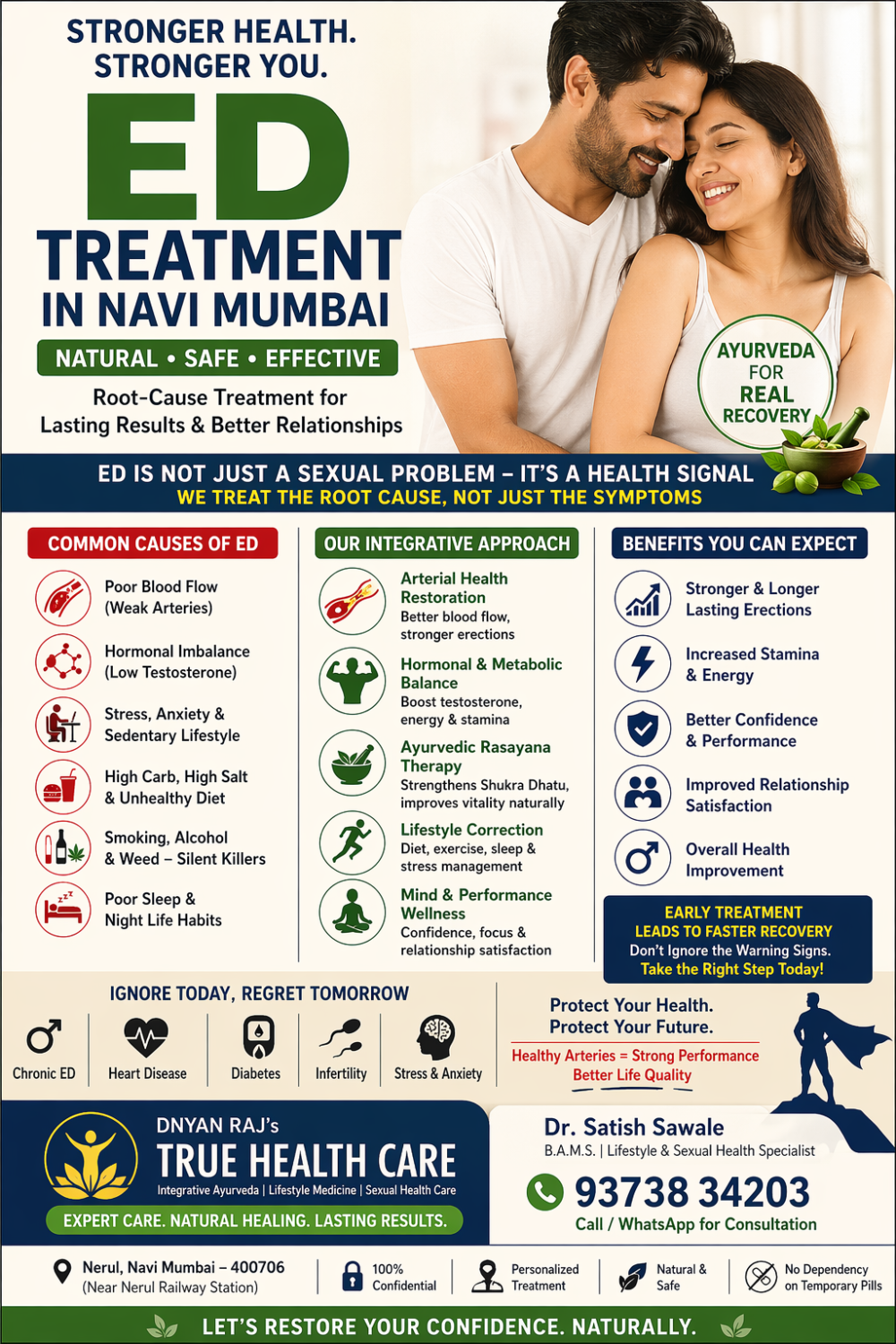
Erectile Dysfunction: The Hidden Vascular Truth Behind Male Vitality

👉 If you’re searching for “ED treatment Navi Mumbai”, you’re in the right place.

What Is Erectile Dysfunction?

ED is the inability to achieve or maintain a satisfactory erection.
But clinically, it reflects deeper issues such as:

  • Poor arterial blood flow
  • Hormonal imbalance
  • Nerve dysfunction
  • Lifestyle-related damage

👉 It is often an early warning sign of cardiovascular and metabolic disease.

Why Patients Choose Us for ED Treatment in Navi Mumbai

✔ Root-cause diagnosis (not just symptom suppression)
✔ Drug-free, natural recovery approach
✔ Personalized treatment plans
✔ Focus on long-term sexual health & vitality
✔ Confidential, patient-friendly consultation

Our Advanced ED Treatment Approach

1. Vascular (Arterial) Restoration

  • Improve blood circulation
  • Enhance endothelial function
  • Restore natural erection mechanism

2. Hormonal Optimization

  • Improve testosterone balance
  • Boost libido and stamina
  • Address fatigue and low energy

3. Lifestyle Correction Program

  • Diet restructuring (low refined carbs, balanced nutrition)
  • Exercise protocol for vascular fitness
  • Sleep and stress correction

4. Ayurvedic Rasayana Therapy

  • Strengthens reproductive tissue (Shukra Dhatu)
  • Improves vitality and endurance
  • Supports long-term sexual performance

Common Causes of ED We Treat

  • Diabetes and prediabetes
  • High blood pressure
  • Obesity and sedentary lifestyle
  • Stress and anxiety
  • Alcohol, smoking, and cannabis use

👉 These factors damage arteries, hormones, and nerve response

Symptoms You Should Not Ignore

  • Weak or inconsistent erection
  • Reduced sexual stamina
  • Low libido
  • Early fatigue during intimacy
  • Performance anxiety

👉 Early intervention = faster recovery

How Lifestyle & Habits Affect ED

Habits like:

  • High-carb, processed diet
  • Excess salt intake
  • Sedentary routine
  • Late-night lifestyle
  • Alcohol & smoking

…lead to:

  • Reduced blood flow
  • Hormonal suppression
  • Poor sexual performance

Benefits of Our ED Treatment Program

✔ Stronger, more consistent erections
✔ Increased stamina and energy
✔ Improved confidence
✔ Better relationship satisfaction
✔ Long-term health improvement

Who Should Seek ED Treatment?

  • Men aged 25–65 experiencing performance issues
  • Patients with diabetes or hypertension
  • Individuals with stress-related ED
  • Those dependent on temporary ED medications

Why Early Treatment Matters

Ignoring ED may lead to:

  • Chronic erectile dysfunction
  • Heart disease risk
  • Fertility issues
  • Psychological stress

👉 Treat early to reverse naturally.

Final Takeaway

👉 Erectile Dysfunction is not just a symptom—it’s a signal.
👉 Address the root cause, and recovery becomes sustainable.

Healthy arteries = Strong performance = Better life quality

Read more

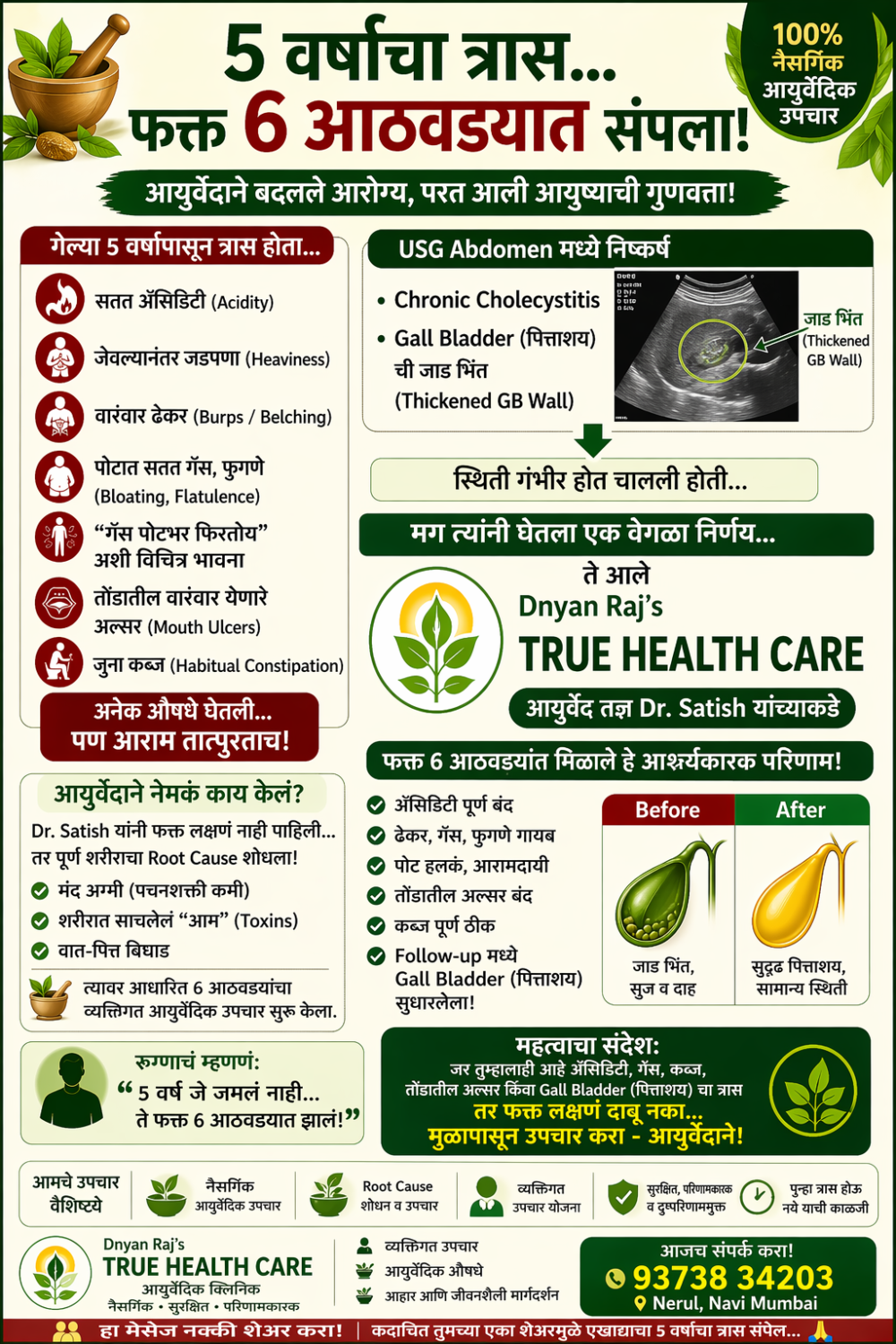
Chronic Acidity, Gas & Cholecystitis Resolved Naturally in 6 Weeks with Ayurveda

Chronic digestive symptoms are often interconnected—not isolated issues.

Patient Experience

For nearly 5 years, the patient struggled daily with:

  • Persistent acidity and heaviness
  • Frequent burps and belching
  • Continuous bloating and flatulence
  • Sensation of gas moving all over the stomach
  • Painful recurrent mouth ulcers
  • Long-standing habitual constipation

Despite trying multiple symptomatic treatments, relief was always temporary. The digestive discomfort began affecting appetite, sleep, and overall quality of life.

A turning point came when an USG Abdomen screening revealed:

  • Chronic cholecystitis
  • Thickened gallbladder (GB) wall

At this stage, the patient assertively chose an integrative Ayurvedic approach.

At Dnyan Raj’s True Health Care Ayurveda clinic, the case was assessed beyond just reports.

This explained the full symptom cluster:

  • Gas + bloating + Belching → Vata aggravation/ Diversion due to Ama
  • Acidity + ulcers → Pitta imbalance
  • Habitual Constipation → Apana Vata dysfunction smooth muscle dysfunction due to tone loss
  • GB inflammation → Pitta-Aama pathology

Treatment Protocol

A targeted 6-week Ayurveda protocol was initiated:

1. Aama Detox & Agni Correction

  • Deepana–Pachana medicines to restore digestion
  • Reduction of internal inflammation

2. Gut Motility & Vata Regulation

  • Mild bowel correction (non-habit forming)
  • Correction of habitual constipation

3. Pitta Shamana (Cooling & Healing)

  • Ulcer-healing herbs
  • Acid regulation without suppressing digestion
  • Gut – Brain Axis correction

4. Gallbladder Support

  • Specific Ayurvedic formulations for:
    • Reducing GB wall thickening
    • Improving bile flow
    • Preventing recurrence

5. Diet & Lifestyle Alignment

  • Timed eating schedule
  • Avoidance of incompatible foods (Viruddha Ahara)
  • Simple, gut-friendly meals

Results in Just 6 Weeks

The transformation was clinically and symptomatically evident:

✔ Acidity and heaviness – completely resolved
✔ Burps, belching, bloating – significantly reduced
✔ Gas movement sensation – eliminated
✔ Mouth ulcers – stopped recurring
✔ Habitual constipation – normalized bowel movement
✔ Follow-up scan – chronic cholecystitis improved, GB wall normalized

Most importantly, the patient regained:

  • Comfortable digestion
  • Stable appetite
  • Better energy levels

Why This Case Matters

This case demonstrates a critical clinical insight:

Chronic digestive symptoms are often interconnected—not isolated issues.

Where conventional care may compartmentalize acidity, constipation, and gallbladder disease separately, Ayurveda treats the root metabolic dysfunction, leading to multi-system healing.

Why Choose Ayurveda with Dr Satish?

At Dnyan Raj’s TRUE HEALTH CARE, the approach is:

  • Root-cause focused, not symptom suppression
  • Customized to individual prakriti & pathology
  • Evidence-backed with clinical observation and follow-ups
  • Designed for long-term correction, not temporary relief

Final Takeaway

If you are experiencing:

  • Acidity, bloating, gas, belching
  • Recurrent mouth ulcers
  • Chronic constipation
  • Or diagnosed conditions like chronic cholecystitis

Then this case highlights a clear possibility:

👉 Structured Ayurvedic intervention can reverse even long-standing digestive disorders—safely and effectively.


Read more

Holistic Approaches to Joint and Shoulder Pain: The Ayurvedic Perspective

Holistic Approaches to Joint and Shoulder Pain: The Ayurvedic Perspective

Understanding Joint Pain and Its Causes

Joint pain, particularly in the shoulder, is a common ailment that can significantly impact quality of life. The shoulder joint, a complex structure composed of bones, muscles, and ligaments, is susceptible to various injuries and conditions that may lead to pain and discomfort. The most prevalent types of shoulder pain include rotator cuff injuries, tendinitis, and conditions such as frozen shoulder syndrome, which can restrict motion and lead to chronic discomfort.

Injuries typically occur due to trauma or overuse, particularly in athletes or individuals engaging in repetitive overhead movements. Rotator cuff injuries, characterized by tendon damage or inflammation, can manifest as sharp pain during specific activities or a dull ache at rest. Stiffness and reduced range of motion are common symptoms indicative of conditions like frozen shoulder syndrome, also known as adhesive capsulitis, which may develop after prolonged immobility.

Chronic conditions such as arthritis can also contribute to joint pain. Both osteoarthritis and rheumatoid arthritis can affect the shoulders, leading to inflammation, stiffness, and indeed, severe discomfort. Patients may notice their symptoms worsening with physical activities or prolonged periods of inactivity.

Moreover, individuals with diabetes may experience joint pain due to complications such as diabetic neuropathy or limited joint mobility. The excess glucose in the bloodstream can affect the soft tissues around the joints, leading to pain or stiffness. Understanding the various causes of joint pain, especially in the shoulder, is crucial for effective treatment and management. Identifying the underlying issue allows for the implementation of a holistic approach, often advocated in Ayurvedic practices, to alleviate symptoms and restore function.

The Impact of Frozen Shoulder on Daily Life

Frozen shoulder, or adhesive capsulitis, is a condition characterized by stiffness and pain in the shoulder joint, severely impacting an individual’s daily activities. This ailment progresses through three distinct stages: the freezing stage, where pain intensifies and movement becomes limited; the frozen stage, which is marked by stiffness and significant restriction of motion; and the thawing stage, in which shoulder mobility gradually returns. Each phase can last several months, during which time patients experience varying levels of discomfort and mobility restrictions.

Symptoms of frozen shoulder often include persistent pain that hinders routine movements such as reaching overhead, lifting objects, or even simple tasks like dressing or grooming. Individuals may notice that morning stiffness can last for an hour or longer after waking, making it challenging to initiate daily responsibilities. This prolonged stiffness can complicate personal hygiene or self-care, leading to frustration and irritability throughout the day.

The psychological impact of living with frozen shoulder can be profound. Chronic pain often leads to feelings of helplessness, anxiety, and depression, particularly as individuals grapple with the limitations imposed by their condition. For many, the inability to perform daily tasks without discomfort can erode their sense of independence and affect their quality of life. Those who rely on physical activity for emotional relief may find their coping strategies challenged, which can exacerbate feelings of stress and isolation. Additionally, the constant strain of managing pain can have social implications, as personal and professional interactions may be negatively affected by their physical condition.

Overall, frozen shoulder poses not only a physical barrier but also a psychological challenge, highlighting the profound interconnectedness of mental and physical health in the context of chronic pain conditions.

Recognizing Other Associated Symptoms: Deformed Fingers and Wrists

Joint pain often presents itself as the primary complaint; however, it is essential to recognize that it may be accompanied by other significant symptoms, including deformed fingers and wrist issues. These additional manifestations can result from various underlying conditions such as rheumatoid arthritis, osteoarthritis, or even genetic disorders. When joints and surrounding tissues are inflamed or degenerating, they can lead to abnormal growth patterns in the bones and soft tissues, causing an alteration in shape or design of fingers and wrists.

Deformed fingers may present urgently noticeable symptoms, such as difficulty gripping objects, reduced strength, and changes in dexterity. These issues can severely impact one’s ability to perform daily activities, from simple tasks like buttoning a shirt to more complex actions such as typing or playing a musical instrument. Similarly, wrist deformities can hinder mobility, limiting a person’s range of motion and functionality. As these symptoms progress, they can contribute to overall crippling conditions, creating a cycle that further exacerbates the individual’s joint pain and disability.

Understanding the root causes of these symptoms is vital. Conditions like psoriatic arthritis, which stems from an autoimmune response, can lead to both joint pain and the development of characteristic finger deformities. Moreover, lifestyle factors, including poor ergonomics during activities such as typing or frequent repetitive movements, can put additional strain on the joints, leading to both wrist and finger issues. Identifying both the pain in the joints and the associated symptoms can encourage patients to seek comprehensive treatment options that encompass both direct pain management and rehabilitation strategies aimed at restoring functionality and mobility.

A Closer Look at Neck Sprains and Back Pain

Neck sprains and back pain are common musculoskeletal issues that can significantly impact an individual’s quality of life. The neck, composed of seven cervical vertebrae, serves as a pivotal connection between the brain and the rest of the body. Any injury or strain to this delicate structure can lead to pain not only in the neck but can also radiate to the back and shoulders, causing a cascade of discomfort that affects one’s overall functionality.

Maintaining good posture is crucial in preventing neck and back injuries. Poor posture, particularly during prolonged periods of sitting, can lead to muscle imbalances and increased strain on the spine. This can contribute to conditions such as cervical radiculopathy and lower back pain, which arise when nerves in the neck and lower back become irritated or compressed. Such injuries can compromise the alignment of the spine, leading to limited mobility and persistent pain.

Additionally, the neck and back work in unison to facilitate movement and maintain stability. An injury to the neck can disrupt this balance, creating compensatory patterns that may place additional stress on surrounding structures, resulting in further pain. For instance, someone with a neck sprain may unconsciously alter their posture to avoid discomfort, potentially leading to tightening of the back muscles, exacerbating mid and lower back pain.

Incorporating holistic healing approaches, such as yoga and mindfulness, can greatly assist in alleviating pain and improving posture. Approach these healing practices with consistency and an understanding of your body’s limits to ensure safety and effectiveness. A mindful integration of these methods may enhance overall posture, reduce the risk of injury, and promote a more balanced structural alignment.

The Role of Ayurveda in Treating Joint and Shoulder Pain

Ayurveda, an ancient system of medicine originating from India, is grounded in the belief that health is a harmonious balance between body, mind, and spirit. This holistic approach prioritizes understanding individual constitution, known as ‘Prakriti,’ to address health concerns more effectively. In the context of treating joint and shoulder pain, Ayurveda emphasizes the identification of root causes rather than simply alleviating symptoms.

Joint and shoulder pain can arise from various factors, including imbalanced doshas, injury, poor nutrition, and lifestyle choices. In Ayurveda, the three doshas—Vata, Pitta, and Kapha—are fundamental to understanding health. An excess of Vata, for instance, can lead to dryness and instability in the joints, potentially causing pain and discomfort. By assessing the individual’s doshic balance, Ayurveda practitioners formulate personalized treatment plans that may include dietary adjustments, herbal remedies, and lifestyle modifications.

Herbs such as turmeric, ginger, and ashwagandha play a significant role in Ayurvedic treatments for joint pain due to their anti-inflammatory and analgesic properties. Additionally, practices like Abhyanga, a form of therapeutic oil massage, can improve circulation and alleviate tension in the affected areas. Furthermore, Ayurveda encourages physical activities like yoga, which not only strengthens musculoskeletal structures but also promotes flexibility and mental wellness.

Ultimately, the Ayurvedic perspective on joint and shoulder pain fosters a comprehensive understanding of health, emphasizing the importance of treating the person as a whole. By addressing both the physical and emotional aspects of pain, Ayurveda seeks to restore balance and promote long-term wellbeing, rather than merely offering temporary relief. Through this holistic lens, individuals experiencing joint and shoulder discomfort can find tailored solutions that honor their unique constitution and foster healing.

Ayurvedic Therapies for Relief and Recovery

Ayurveda, the ancient system of medicine from India, offers a holistic approach to treating joint and shoulder pain through a variety of therapies aimed at restoring balance within the body. Among these treatments, Panchakarma plays a crucial role. This detoxification process consists of five primary therapies that eliminate toxins from the body, thus promoting healing. By focusing on the affected areas, Panchakarma helps alleviate inflammation and pain associated with joint conditions.

In addition to detoxification, Ayurvedic oil massages are fundamental in managing joint and shoulder pain. Specific oils, often infused with herbs like eucalyptus and wintergreen, are used to improve circulation and provide deep relaxation to the muscles surrounding the joints. Massaging these areas can enhance flexibility and minimize stiffness, contributing significantly to pain relief. These sessions not only offer physical benefits but also help in nurturing the mental and emotional well-being of the individual.

Moreover, dietary recommendations are an essential aspect of Ayurvedic care for joint health. A diet rich in anti-inflammatory foods—such as turmeric, ginger, and healthy fats—can support the body in healing and maintaining joint integrity. Avoiding processed foods and sugars is also advised, as they can aggravate inflammation. Following Ayurvedic principles on diet, including mindful eating and digestion, ensures that the body remains balanced and receptive to healing practices.

Holistic approaches, such as these Ayurvedic therapies, work synergistically to restore balance and enhance recovery from joint and shoulder pain. By addressing not only the symptoms but also the underlying causes of the discomfort, Ayurveda provides a comprehensive pathway to pain relief and improved functionality.

Rasayana Medicines: Revitalizing Body and Mind

Rasayana is a branch of Ayurveda focused on rejuvenation and revitalization. It aims to restore balance and enhance the body’s natural vitality through various herbal formulations. These medicines are particularly effective in strengthening the immune system and promoting overall well-being. The use of Rasayana herbs has been cherished for centuries, aiding not only in the rejuvenation of body tissues but also in enhancing mental clarity and emotional stability.

One of the primary benefits of Rasayana medicines is their ability to support joint health. Key herbs, such as Ashwagandha (Withania somnifera) and Guggulu (Commiphora mukul), are known for their anti-inflammatory properties, which can alleviate discomfort associated with joint pain. These herbs contribute to the lubrication of joints and promote healthier movement, thereby enhancing mobility and reducing pain.

In addition to joint health, Rasayana formulations also significantly benefit skin health. Herbs like Amalaki (Phyllanthus emblica) and Shatavari (Asparagus racemosus) provide antioxidants that protect the skin from oxidative stress. This protective role is vital not just for skin appearance but also for maintaining its resilience and suppleness. The rejuvenating qualities of these herbs aid in enhancing circulation and promoting collagen production, ultimately leading to a healthier complexion.

Moreover, Rasayana treatments typically include lifestyle recommendations, nurturing a holistic approach that spans diet, exercise, and meditation practices. This comprehensive viewpoint contributes significantly to the rejuvenation process, ensuring that the body and mind are receiving equal attention. Regular incorporation of Rasayana medicines into one’s routine can lead to a marked improvement in both physical and mental health, supporting an overall state of wellness.

Case Study: Dr. Satish Sawale at Dnyan Raj’s True Health Care

Dr. Satish Sawale, a leading practitioner of Ayurveda at Dnyan Raj’s True Health Care, has demonstrated significant success in treating patients suffering from joint and shoulder pain. This section aims to illuminate the effectiveness of Ayurvedic treatments through the insights gathered from real-life patient experiences and testimonials.

One notable case involves a 58-year-old female patient who had been struggling with chronic shoulder pain for over two years. After exhausting conventional medical treatments with little relief, she turned to Dr. Sawale. Upon a thorough evaluation, it was determined that her condition stemmed from imbalances in her doshas, particularly Vata and Kapha. Following an individualized treatment plan that included a combination of Panchakarma detoxification therapies and customized herbal formulations, the patient reported significant improvements within weeks. Not only did her pain decrease, but her range of motion greatly enhanced.

An additional case features a 45-year-old male who initially presented with severe joint pain associated with rheumatoid arthritis. Dr. Sawale utilized a holistic approach that incorporated dietary changes, yoga practices, and specific herbal remedies aimed at reducing inflammation and promoting joint health. Over the course of several months, the patient experienced considerable alleviation of his joint discomfort, enabling him to return to his daily activities with increased mobility.

Testimonials from patients underscore the transformative impact of Dr. Sawale’s Ayurvedic interventions. Many report not only physical improvements but also enhanced emotional well-being, a reflection of Ayurveda’s emphasis on treating the individual as a whole. This holistic approach fosters not only pain relief but also a more balanced and healthier lifestyle.

Adopting a Holistic Lifestyle for Joint Health

Embracing a holistic lifestyle is fundamental for maintaining optimal joint health, particularly from an Ayurvedic perspective. This approach not only focuses on alleviating joint pain but also emphasizes prevention and overall well-being. One of the core components of Ayurveda is diet. Consuming a balanced diet rich in anti-inflammatory foods can significantly impact joint health. Including spices like turmeric and ginger, as well as omega-3 fatty acids from sources like walnuts, flaxseeds, and fatty fish, can help reduce inflammation and support joint function.

Exercise is another crucial element in promoting joint health. Engaging in regular, low-impact exercises such as yoga or swimming can improve flexibility and strengthen the muscles surrounding the joints. Yoga, rooted in Ayurvedic principles, not only helps in physical conditioning but also promotes mental well-being, reduces stress, and encourages mindfulness, which are essential for overall health.

Stress management is an often overlooked yet vital aspect of a holistic lifestyle. High levels of stress can exacerbate pain and discomfort. Practicing mindfulness techniques such as meditation can lower stress levels, thereby indirectly benefiting joint health. Incorporating time for relaxation and conscious breathing into your daily routine can also facilitate this process.

Finally, regular check-ups with healthcare professionals can help monitor joint health and provide personalized guidance. These check-ups allow for early detection of potential issues and ensure that any holistic practices adopted are effective.

In summary, a holistic lifestyle centered around Ayurvedic principles involves a balanced diet, regular physical activity, active stress management, and routine health evaluations. Together, these elements contribute to better joint health and an improved quality of life.

Read more

Time Tested Ayurvedic Treatment for Swallowing & Voice Disorders

Introduction

Swallowing and voice are not merely mechanical functions—they are deeply governed by subtle neurophysiological and pranic mechanisms described in Ayurveda. Among the five subtypes of Vata, Pran Vayu and Udan Vayu play a central role in deglutition (swallowing), phonation (voice production), and airway protection.

Disturbance (Vikriti) in these vayus manifests as:

Dysphagia (difficulty swallowing)

Hoarseness or voice fatigue

Loss of voice (aphonia)

Choking episodes

Post-surgical or post-radiation complications in ENT cancers

Ayurveda offers a root-cause, neuro-functional, and regenerative approach, making it especially valuable in ENT disorders and post-cancer rehabilitation.

Understanding Pran & Udan Vayu

Pran Vayu

Location: Head, brain, chest

Functions:

    • Controls swallowing reflex
    • Coordinates breathing and airway protection
    • Governs sensory processing and cranial nerve function

Udan Vayu

Location: Chest, throat, vocal apparatus

Functions:

    • Speech and voice production
    • Effort, expression, and vocal strength
    • Upward movement of energy

Pathophysiology: What Happens in Vikriti

Pran Vayu Vikriti

Impaired swallowing reflex

Poor coordination between breathing and swallowing

Increased risk of aspiration

Neurological weakness (common in stroke, post-radiation fibrosis)

Udan Vayu Vikriti

Hoarseness, weak voice

Vocal cord fatigue or paralysis

Difficulty in articulation

Loss of vocal confidence (often seen in post-laryngeal cancer cases)

Modern Correlation (Bridging Ayurveda & Clinical Science)

Ayurvedic conceptModern Interpretation
Pran Vayu dysfunctionCranial nerve impairment (IX, X, XII), brainstem dysfunction
Udan Vayu imbalanceLaryngeal nerve dysfunction, vocal cord pathology
Vata aggravationNeurodegeneration, dryness, tissue atrophy.

This integrative understanding strengthens clinical credibility and patient acceptance.

Clinical Conditions Where This Applies

Post head & neck cancer (surgery/radiotherapy)

Vocal cord nodules or paralysis

Chronic laryngitis

GERD-induced voice issues

Neurological dysphagia (stroke, Parkinsonism)

Functional voice disorders in professionals (teachers, speakers)

Ayurvedic Approach: Root-Cause Healing

1. Vata Shamana (Primary Strategy)

Since both Pran and Udan are subtypes of Vata:

Snehan (oleation)

Mridu Swedana (gentle sudation)

Vata-pacifying diet

2. Nasya Therapy (Highly Effective)

Directly acts on Pran Vayu

Improves cranial nerve function

Enhances swallowing reflex and voice clarity

3. Gandusha & Kavala (Oil Holding)

Strengthens oral and pharyngeal muscles

Improves salivation and lubrication

Prevents dryness post-radiation

4. Medhya Rasayana & Saman Vata- Apana Anulomana Medicines

Support neural regeneration

Improve coordination of swallowing and speech

5. Rasayana Therapy (Critical in Post-Cancer Care)

Tissue rejuvenation

Reduces fibrosis and dryness

Enhances immunity and recovery

Diet & Lifestyle Protocol

Recommended

Warm, unctuous, easy-to-swallow foods

Ghee, medicated oils

Herbal decoctions for throat soothing

Avoid

Dry, cold, rough foods

Excess talking or vocal strain

Stress and irregular eating patterns

Role in Post-Cancer Rehabilitation (ENT Focus)

Patients recovering from:

Laryngeal cancer

Oral cancer

Thyroid surgery

Often face:

Swallowing difficulty

Voice loss

Mucosal dryness

Fibrosis

Ayurveda Benefits

Restores functional swallowing without dependency

Improves voice quality naturally

Reduces long-term complications of radiation

Enhances quality of life and confidence

Why Ayurveda Stands Out in ENT (Benine Outgrowths)

Unlike symptomatic management, Ayurveda:

Targets neuromuscular coordination

Works on tissue nourishment (Dhatu Poshana)

Restores Pranic flow

Offers non-invasive rehabilitation

This makes it uniquely positioned for:

Chronic ENT disorders

Functional voice recovery

Long-term rehabilitation care

Clinical Experience Insight

In practice, patients undergoing Ayurvedic protocols for Pran–Udan imbalance often show:

Gradual improvement in swallowing coordination

Reduced choking episodes within weeks

Noticeable enhancement in voice strength

Improved emotional confidence (important in cancer survivors

Disturbances in Pran and Udan Vayu are central to many swallowing and voice disorders, especially in ENT and post-cancer scenarios. Ayurveda, with its neuro-functional and regenerative approach, offers a powerful, safe, and sustainable pathway to recovery.

For patients seeking holistic rehabilitation beyond conventional limits, Ayurveda provides not just symptom relief—but restoration of function, dignity, and quality of life.

Read more

Urine leakage Embarrassment to Confidence: A 78-Day Ayurvedic Recovery Story

a case visited for dry cough and latter revealed to the actual cause of attending when she benefited for dry cough….

🌿 From Embarrassment to Confidence: A 78-Day Ayurvedic Recovery Story
Regaining Control Over Urinary Leakage & Life

For nearly 3–4 years, a 48-year-old woman silently struggled with a problem many hesitate to talk about—urinary leakage during coughing and sneezing.

It began subtly. A few drops during a cold. Then gradually, it became frequent.

Sneezing → leakage

Coughing → leakage

Laughing → anxiety

What followed was not just a physical issue, but a deep emotional burden.

😔 The Hidden Impact

She started avoiding:

Family gatherings

Social events

Travel

Even simple outings

The constant fear was:
“What if it happens in public?”

Despite trying medications, the relief was temporary. The problem kept returning.

Over time, confidence dropped, weight increased, and lifestyle became restricted.

🌿 Turning Point: Choosing Ayurveda

She consulted Dr. Satish Sawale at DnyanRaj’s TRUE HEALTH CARE, Nerul—not just for symptom relief, but for a permanent solution.

Ayurvedic Understanding

Her condition was assessed as:

Vata imbalance → loss of bladder control

Weak pelvic floor and bladder tone

Metabolic slowdown contributing to weight gain

🧠 The Personalized Treatment Approach

Instead of a one-size-fits-all method, a customized Ayurvedic protocol was initiated:

✔ Internal Medicines

Strengthening bladder tone

Improving neuromuscular control

Reducing involuntary leakage

✔ Lifestyle & Diet Correction

Metabolism correction

Fluid timing guidance

Avoiding bladder irritants

✔ Gentle Detox & Rejuvenation

Improving tissue strength (Dhatu poshan)

Restoring urinary system balance

📈 The Transformation in 78 Days

Leakage episodes reduced significantly

Better bladder control

Improved energy levels

By 78 Days:

✔ Complete control over urine leakage during cough/sneeze
✔ Confidence restored in social situations
✔ 9 kg weight loss (supporting bladder function)
✔ Improved overall well-being

🌟 Life After Recovery

Today, she:

Attends family functions confidently

Travels without anxiety

Lives without constant fear

Her words reflect the transformation:
“It’s not just treatment—it gave me my life back.”

💡 What This Case Teaches

Urinary incontinence is:

Common, especially in women after 40 and due to vaginal
multiple deliveries and miscarriage
Often ignored due to embarrassment

Highly treatable with the right approach

Why Ayurveda Works in Such Cases

✔ Strengthens bladder muscles naturally
✔ Addresses root cause (Vata imbalance)
✔ Improves tissue tone and control
✔ Supports weight management
✔ Prevents recurrence

Personalized Ayurvedic protocols

Long-term healing

Restoring dignity and confidence

📞 Don’t Suffer in Silence

If you or someone you know is facing:

Urine leakage on coughing or sneezing

Fear of social situations

Recurrent urinary issues

👉 Early treatment can change everything

🌿 Take the First Step Toward Confidence Again

DnyanRaj’s TRUE HEALTH CARE – Nerul, Navi Mumbai
Where healing is not just physical, but emotional too.

Read more

Urinary Symptom Complex: A Complete Ayurvedic Approach for Lasting Relief

What is Urinary Symptom Complex?

It is a combination of interrelated urinary issues, including:

  • Kidney stones (Mutrashmari)

  • Dysuria (painful urination)

  • Burning sensation during urination

  • Nocturia (frequent urination at night)

  • Hypotonic / Hypertonic bladder dysfunction

  • Thickened urinary bladder wall

  • very painfull urination and not able to evacuate completely , Urethral stricture

  • Recurrent urinary tract infections (UTIs)

These conditions often share common underlying factors such as inflammation, metabolic imbalance, poor hydration, and aging-related degeneration.


Authentic Ayurvedic Treatment for Urinary Disorders in Nerul, Navi Mumbai

Regain Comfort. Restore Balance. Prevent Recurrence.

Struggling with burning urination, kidney stones, or frequent night urination?
You’re not alone—and more importantly, you don’t have to live with it.

At DnyanRaj’s TRUE HEALTH CARE, Dr. Satish Sawale offers root-cause Ayurvedic treatment for chronic and recurrent urinary problems—without dependency on repeated antibiotics.

🚨 Are You Experiencing These Symptoms?

  • Burning sensation during urination

  • Painful urination (Dysuria)

  • Frequent urination, especially at night (Nocturia)

  • Kidney stones or recurring stone formation

  • Weak urine flow or incomplete emptying

  • Recurrent urinary infections (UTIs)

  • Bladder weakness (hypotonic/hypertonic bladder)

  • Urethral stricture or obstruction

👉 If yes, your body is signaling a deeper imbalance.

❗ Why These Problems Keep Coming Back

Most treatments only suppress symptoms temporarily:

  • Antibiotics → temporary relief, frequent recurrence

  • Painkillers → no root-cause correction

  • Ignored bladder dysfunction → worsening with age

Result: Chronic discomfort, disturbed sleep, and declining quality of life.

🌿 The Ayurvedic Advantage: Treat the Root Cause

At our clinic, we don’t just treat symptoms—we reverse the disease process.

Our Approach Includes:

✔ Balancing Vata, Pitta & Kapha
✔ Detoxifying urinary channels (Mutravaha Srotas)
✔ Strengthening bladder function
✔ Preventing stone formation
✔ Enhancing immunity to stop recurrent infections


💠 Conditions We Successfully Manage

  • Kidney Stones (Mutrashmari)

  • Dysuria & Burning Urination

  • Nocturia (Night Urination)

  • Hypotonic & Hypertonic Bladder

  • Thickened Urinary Bladder Wall

  • Urethral Stricture (Supportive Care)

  • Recurrent UTI in Elderly Patients

👨‍⚕️ Meet Your Expert

Dr. Satish Sawale

Ayurveda Specialist | Urinary Disorder Expert

  • Years of clinical experience in chronic urinary conditions

  • Personalized Ayurvedic protocols

  • Focus on long-term healing and prevention

  • Trusted by patients across Navi Mumbai

🌟 What Makes Us Different?

✔ Individualized treatment (not one-size-fits-all)
✔ Safe for all age groups
✔ Focus on recurrence prevention
✔ Integration of modern diagnostics with Ayurveda
✔ Special care for aging population

🧓 Specialized Care for Elderly Patients

If you or your loved ones suffer from:

  • Frequent night urination

  • Weak bladder control

  • Recurrent infections

Our gentle Ayurvedic therapies help:

✔ Improve bladder strength
✔ Reduce nighttime disturbance
✔ Enhance quality of life

📍 Conveniently Located in Nerul, Navi Mumbai

DnyanRaj’s TRUE HEALTH CARE
Trusted Ayurvedic clinic for urinary disorders near you

📞 Take the First Step Toward Relief

💬 Final Assurance

Urinary disorders are not lifelong conditions—they are correctable imbalances.

With the right Ayurvedic approach, you can achieve:
✔ Lasting relief
✔ Better bladder control
✔ Freedom from recurring infections

Read more

मधुमेही व्यक्तींमध्येपायांवरील दाट केसअसणे हे रक्तवाहिन्यांचे आरोग्य चांगले असण्याचे सूचक आहे!!!

पायांवरील केसांची रेषा (Hairline on Feet) :  मधुमेही व्यक्तींमध्ये आरोग्य, रक्ताभिसरण व लैंगिक तंदुरुस्तीचा महत्त्वाचा संकेत

आजकाल केसांच्या समस्यांवर चर्चा करताना बहुतेक लोक डोक्यावरील केस गळणे किंवा टक्कल पडणे यावर लक्ष केंद्रित करतात. परंतु आयुर्वेद आणि आधुनिक वैद्यकीय निरीक्षणानुसार पायांवरील किंवा पिंडऱ्यांवरील केसांची उपस्थिती किंवा कमी होणे हे शरीराच्या एकूण आरोग्याचे, विशेषतः रक्ताभिसरण, हृदयविकाराचा धोका आणि लैंगिक तंदुरुस्तीचे (sexual fitness) महत्त्वाचे सूचक मानले जाऊ शकते.

नेरुळ, नवी मुंबई येथील Dnyan Raj’s TRUE HEALTH CARE येथे आयुर्वेद तज्ञ डॉ. सतीश सावळे संपूर्ण आरोग्याच्या दृष्टीने अशा सूक्ष्म लक्षणांचे मूल्यांकन करून मूळ कारणांवर आधारित उपचार देतात.

पायांवरील केसांचे आरोग्याशी असलेले नाते

पायांच्या त्वचेवर दिसणारे केस हे केवळ सौंदर्याचा भाग नसून ते रक्तवाहिन्यांचे आणि ऊतींच्या पोषणाचे संकेत देतात.

जर पायांवरील केस:

  • हळूहळू कमी होत असतील

  • पूर्णपणे नाहीसे होत असतील

  • त्वचा कोरडी व चमकदार दिसत असेल

तर कधी कधी ते रक्ताभिसरण कमी होण्याचे संकेत असू शकतात.

हे विशेषतः पुढील परिस्थितींमध्ये दिसू शकते:

  • मधुमेह (Diabetes)

  • रक्तवाहिन्यांचे विकार (Peripheral vascular disease)

  • हृदय व रक्तवाहिन्यांशी संबंधित समस्या

  • हार्मोनल असंतुलन

  • चयापचयातील बिघाड

तरुणांमध्ये याचा अर्थ काय असू शकतो?

तरुणांमध्ये सामान्यतः रक्ताभिसरण मजबूत असते, त्यामुळे पायांवरील केसांची वाढ व्यवस्थित दिसते.

परंतु खालील कारणांमुळे ते कमी होऊ शकतात:

  • जास्त ताणतणाव

  • रात्रीची नोकरी (night shift)

  • धूम्रपान किंवा मद्यपान

  • अयोग्य आहार

  • लठ्ठपणा किंवा metabolic syndrome

या परिस्थितींमध्ये पायांवरील केस कमी होणे हे रक्तवाहिन्यांच्या आरोग्याविषयी लवकर चेतावणी देणारे लक्षण असू शकते.

मधुमेही रुग्णांमध्ये याचे महत्त्व

मधुमेहामुळे शरीरातील सूक्ष्म रक्तवाहिन्यांवर (microcirculation) परिणाम होतो.

त्यामुळे:

  • पायांमध्ये रक्तपुरवठा कमी होणे

  • त्वचा कोरडी होणे

  • केसांची वाढ कमी होणे

  • जखमा उशिरा भरून येणे

म्हणूनच पायांवरील केसांची कमी होणारी वाढ ही मधुमेहाच्या गुंतागुंतींचे प्रारंभिक लक्षण असू शकते.

लैंगिक तंदुरुस्तीशी (Sexual Fitness) असलेले नाते

लैंगिक आरोग्य आणि रक्ताभिसरण यांचा जवळचा संबंध आहे.

योग्य रक्तपुरवठा नसल्यास:

  • लैंगिक क्षमता कमी होणे

  • ऊर्जा कमी वाटणे

  • थकवा व उत्साह कमी होणे

हे विशेषतः पुरुषांमध्ये vascular erectile function शी संबंधित असू शकते.

म्हणूनच पायांवरील केसांची स्थिती कधी कधी रक्तवाहिन्यांच्या आरोग्याचे अप्रत्यक्ष संकेत देऊ शकते.

आयुर्वेदिक दृष्टीकोन

आयुर्वेदानुसार केसांचे पोषण मुख्यतः रस धातू आणि रक्त धातू यांवर अवलंबून असते.

पायांसारख्या शरीराच्या टोकाच्या भागांपर्यंत पोषण पोहोचण्यासाठी स्रोतस (सूक्ष्म वाहिन्या) निरोगी असणे आवश्यक आहे.

जर स्रोतस अवरुद्ध झाले तर:

  • रक्ताभिसरण कमी होते

  • ऊतींचे पोषण घटते

  • केसांची वाढ कमी होते

आयुर्वेद या स्थितीला रक्तदुष्टी, वातदोष वाढ आणि स्रोतस अवरोध यांच्याशी जोडतो.

आयुर्वेदिक उपाय

1. रक्त व रस धातू पोषण

  • पौष्टिक आहार

  • तूप, तिळाचे तेल

  • हिरव्या भाज्या

  • लोहयुक्त आहार

यामुळे रक्तधातू मजबूत होतो.

2. यकृत व चयापचय सुधारणा

यकृत हे रक्तनिर्मिती व पित्त संतुलनासाठी महत्त्वाचे आहे.

आयुर्वेदात:

  • त्रिफळा

  • गुडुची

  • भृंगराज

  • आवळा

यांसारख्या औषधींचा उपयोग केला जातो.

3. रक्ताभिसरण सुधारणा

  • नियमित व्यायाम

  • योग

  • प्राणायाम

  • अभ्यंग (तेल मालिश)

यामुळे शरीरातील रक्तप्रवाह सुधारतो.

4. मधुमेह नियंत्रण

आयुर्वेदिक उपचारांमुळे:

  • रक्तातील साखर नियंत्रण

  • चयापचय सुधारणा

  • ऊतींचे पोषण वाढ

यामुळे दीर्घकालीन गुंतागुंत कमी होऊ शकते.

Dnyan Raj’s TRUE HEALTH CARE येथे समग्र उपचार

नेरुळ, नवी मुंबई येथे डॉ. सतीश सावळे रुग्णांच्या आरोग्याचे मूल्यमापन करताना पुढील बाबींचा विचार करतात:

  • प्रकृती (Prakriti)

  • रक्ताभिसरण

  • हार्मोन संतुलन

  • मधुमेह किंवा चयापचय समस्या

  • जीवनशैली व आहार

यानुसार वैयक्तिक आयुर्वेदिक उपचार, आहार मार्गदर्शन आणि जीवनशैली सुधारणा दिली जाते.

निष्कर्ष

पायांवरील केसांची उपस्थिती किंवा कमी होणे हे कधी कधी रक्तवाहिन्यांच्या आरोग्याचे आणि शरीराच्या एकूण तंदुरुस्तीचे संकेत देऊ शकते.

विशेषतः तरुण आणि मधुमेही व्यक्तींमध्ये हे लक्षण लक्षात घेऊन वेळेवर उपचार घेतल्यास हृदय आरोग्य, रक्ताभिसरण आणि लैंगिक तंदुरुस्ती सुधारण्यास मदत होऊ शकते.

Read more

Diabetes, lost hair from feet, Circulation & Confidence: A Real Patient Transformation with Ayurveda in Navi Mumbai

A Patient Story from Dnyan Raj’s TRUE HEALTH CARE, Nerul

By Dr. Satish Sawale

Lifestyle diseases like diabetes often affect more than blood sugar levels. They influence circulation, metabolism, hormonal balance, and even personal confidence. Many patients hesitate to discuss these concerns openly, but addressing them holistically can lead to remarkable transformation.

This is the story of a 46-year-old professional from Navi Mumbai (name changed) who experienced significant improvement in health, vitality, and quality of life through Ayurvedic care, disciplined diet, and lifestyle transformation at Dnyan Raj’s TRUE HEALTH CARE in Nerul.

The Hidden Struggles Behind Diabetes

IT-Buddy had been living with Type-2 Diabetes for nearly 8 years. Like many working professionals, his routine involved:

  • long working hours

  • irregular eating habits

  • limited physical activity

  • increasing stress levels

Gradually he developed moderate obesity and dyslipidemia (high cholesterol levels).

However, the most concerning issues for him were:

• Reduced stamina and fatigue
• Swelling on the feet, bit shiny skin
• Mild puffiness around the eyes

• Not Happy to use staircase

• Snoring also shared by his best half

• Reduced hair growth on lower legs and feet compared with his college days
• Declining confidence in intimate life (Both weren’t happy about even lost charm)

These symptoms made him realize that diabetes was affecting more than just blood sugar levels.

A Small Physical Sign That Raised Concern

During consultation at Dnyan Raj’s TRUE HEALTH CARE, Dr. Satish Sawale carefully examined IT-Buddy’s overall health patterns.

One subtle observation stood (Dr satish pointed) out  — hairline on the feet was significantly reduced.

Hair follicles depend on healthy blood circulation through small blood vessels. When circulation becomes sluggish due to metabolic disorders like diabetes and lipid imbalance, hair growth in the lower limbs may decrease.

This observation suggested that he might be experiencing micro-circulatory disturbances, which can also affect overall vitality.

Ayurvedic Perspective on Diabetes and Vitality

In Ayurveda, diabetes is broadly described under BAHUDODHAVASTHA , a condition involving disturbances in metabolism and body tissues.

Therefore, the goal of treatment was restoring systemic balance rather than only lowering sugar levels.

The Ayurvedic Healing Plan

Dr. Sawale designed a comprehensive 360-degree lifestyle and Ayurvedic wellness program

1. Personalized Ayurvedic Medicines

Herbal formulations were prescribed to support:

  • blood sugar balance

  • lipid metabolism

  • liver function

  • microcirculation

  • metabolic detoxification

  • Those are Dipan Pachan and sukshma srotogami

2. Structured Diet Correction

IT-Buddy adopted a consistent and disciplined dietary routine, focusing on:

  • Freshly prepared natural foods

  • Green vegetables

  • Balanced whole grains

  • No sugar, refined packaged foods

  • digestive spices supporting metabolism

Diet consistency played a crucial role in stabilizing metabolic health.

3. Daily Exercise and Yogic Practices

To improve circulation and metabolism, a routine was introduced including:

  • Brisk walking 5km-7km

  • light strength exercises

  • yogic stretches

  • breathing practices (pranayama)

These practices helped stimulate blood circulation and metabolic activity.

The Transformation Over Months (98 days usually takes 90-120 days)

With disciplined lifestyle changes and Ayurvedic care, IT-Buddy gradually experienced measurable improvements.

Within months he noticed:

✔ improved blood sugar control HbA1c hit to 5.6
✔ better lipid profile in lab reports 
✔ reduction in swelling of feet
✔ reduced puffiness around eyes
✔ improved stamina and energy
✔ better metabolic balance

✔ Better Early Morning Manhood

✔ No snoring At all

His overall wellbeing improved significantly.

Renewed Confidence and Personal Happiness

As IT-Buddy’s health improved, so did his confidence and emotional wellbeing.

He reported feeling more energetic, active, and positive. His spouse also noticed the transformation — not only in his physical health but also in his enthusiasm, confidence, and overall presence at home and office also appreciated by promotion with updated skills which he was unable to learn in past 2yrs

Their relationship became stronger as they celebrated this health transformation together.

The Key Lesson from This Story

IT-Buddy’s experience highlights an important message.

Small physical signs such as:

  • Hairline shift , shiny skin and swelling in feet

  • puffiness around eyes

  • reduced hair growth on lower legs

  • persistent fatigue

may indicate deeper metabolic imbalance and circulatory issues.

Addressing these early through holistic lifestyle corrections and Ayurvedic support can significantly improve overall health and vitality.

Ayurvedic Diabetes Reversal and Care in Navi Mumbai

At Dnyan Raj’s TRUE HEALTH CARE, Nerul,
Dr. Satish Sawale provides personalized Ayurvedic care for:

  • Diabetes Reversal Management

  • Holistic  Metabolic Disorders Approach

  • Circulation Improvement

  • Vision For lifestyle-related Fitness

  • Overall Vitality And Wellness

Each patient receives individualized treatment based on body constitution, metabolism, and lifestyle patterns.

Final Thought

Health transformation is rarely instant. It requires consistent effort, lifestyle discipline, and the right guidance.

IT-Buddy’s journey demonstrates how a balanced approach combining Ayurveda, diet correction, and regular exercise can support meaningful improvements in metabolic health and quality of life.

Read more

Shifting Hairline Of Legs & forehead, Hair Thinning,Early Graying, Split Ends: An Ayurvedic 360° Approach

Hair problems such as hair fall, premature greying, split ends, thinning hair, and baldness are becoming increasingly common in today’s fast-paced lifestyle. Factors like night shifts, hormonal imbalance, stress, poor diet, thyroid disorders, PCOS, and hereditary tendencies significantly affect hair health.

At Dnyan Raj’s TRUE HEALTH CARE, Nerul, Navi Mumbai, Dr. Satish Sawale offers a 360-degree Ayurvedic approach that addresses the root cause of hair disorders, rather than merely treating the symptoms. Ayurveda views hair as a reflection of the body’s internal health, especially the condition of Rasa Dhatu, Rakta Dhatu, Asthi Dhatu, and Majja Dhatu.

Understanding Hair Health in Ayurveda

According to Ayurveda, hair (Kesha) is closely related to the body’s deeper tissues.

  • Rasa Dhatu (nutritive fluid) nourishes the hair follicles.

  • Rakta Dhatu (blood tissue) provides oxygenation and circulation to the scalp.

  • Pitta Dosha governs pigmentation, which determines the natural color of hair.

  • Asthi Dhatu (bone tissue) gives structural strength to hair shafts.

  • Meda & Majja Dhatu (marrow & nervous tissue) contributes to hair thickness, vitality, and luster.

Healthy hair depends on efficient blood circulation and balanced metabolism. When these systems are disturbed, the scalp follicles weaken, leading to hair fall, thinning, premature greying, and brittle hair.

Common Causes of Hair Problems in Modern Lifestyle

1. Age and Metabolic Changes

With increasing age, the regeneration of tissues slows down. The nourishment reaching hair follicles decreases, which may cause:

  • gradual thinning of hair

  • early greying

  • dryness and split ends

  • male or female pattern baldness

Ayurveda focuses on rejuvenation (Rasayana therapy) to slow these degenerative processes.

2. Poor Diet and Nutritional Deficiency

Hair health strongly reflects dietary habits. Frequent consumption of processed foods, irregular meals, excessive caffeine, and junk food leads to poor nourishment of hair follicles.

Key dietary factors affecting hair include:

  • low protein intake

  • iron deficiency

  • vitamin B and trace mineral deficiency

  • dehydration

Ayurvedic dietary correction improves Rasa and Rakta Dhatu formation, ensuring proper nourishment of scalp hair.

3. Night Shift and Circadian Rhythm Disturbance

Night shifts disrupt the body’s biological clock (Dinacharya and Ritucharya principles).

This can lead to:

  • hormonal imbalance

  • liver stress

  • metabolic disturbances

  • increased hair fall and premature greying

Young professionals working in IT, healthcare, and corporate sectors frequently experience these issues. Ayurveda helps restore circadian harmony through lifestyle regulation, detoxification, and herbal support.

4. Hormonal Disorders: Hypothyroidism & PCOS

Hormonal imbalance plays a major role in hair disorders.

Hypothyroidism

Often causes:

  • hair thinning

  • coarse, dry hair

  • eyebrow hair loss

  • slow hair growth

PCOS (Polycystic Ovary Syndrome)

Common hair manifestations include:

  • excessive hair fall

  • scalp thinning

  • hirsutism (excess hair on face, chest, or abdomen)

Ayurveda manages these conditions by correcting hormonal metabolism, digestion (Agni), and liver health, which helps normalize hair growth cycles.

5. Hereditary and Genetic Factors

Family history often predisposes individuals to pattern baldness or early greying. However, Ayurveda explains that genetic tendencies can be moderated through lifestyle, diet, and Rasayana therapy, delaying progression and strengthening remaining hair follicles.

Why Split Ends and Weak Hair Occur

Hair strength and texture are influenced by Meda Dhatu, Asthi Dhatu and Majja Dhatu.

When these tissues are weak:

  • hair becomes brittle

  • split ends (trichoptilosis) appear

  • hair shafts become rough and dull

Ayurvedic therapies strengthen the deeper tissues responsible for hair structure and vitality.

Liver Health and Hair Pigmentation

Ayurveda links hair color and pigmentation to Pitta and liver function.

When the liver metabolism is disturbed:

  • premature greying increases

  • hair texture deteriorates

  • scalp inflammation may occur

Correcting liver health through herbal medicines, detox therapies, and diet can improve hair pigmentation and overall scalp health.

Why Hair Treatment Takes Time

Hair follicles grow in cycles. Since hair health depends on deeper body tissues, Ayurvedic correction takes time to reflect externally.

Typically:

  • 3 months – improvement in scalp health and hair fall control

  • 6 months – visible improvement in hair thickness, strength, and texture

  • 6–12 months – sustainable regrowth and stabilization

Changes may also be visible in body hair patterns, such as improvement in hirsutism in PCOS cases.

360° Ayurvedic Hair Care at Dnyan Raj’s TRUE HEALTH CARE

At Dnyan Raj’s TRUE HEALTH CARE in Nerul, Navi Mumbai, Dr. Satish Sawale provides personalized Ayurvedic management based on:

Individual Body Constitution (Prakriti)

Every patient receives treatment tailored to their Vata, Pitta, and Kapha balance.

Seasonal Adaptation (Ritu Charya)

Hair care protocols change according to seasonal influences that affect scalp health.

Comprehensive Diagnosis

Evaluation includes:

  • diet and lifestyle analysis

  • hormonal health

  • digestive strength (Agni)

  • stress levels

  • hereditary factors

Integrated Ayurvedic Therapies

The treatment plan may include:

  • herbal medicines for hair nourishment

  • scalp rejuvenation therapies

  • liver detoxification support

  • hormonal balance protocols

  • Rasayana rejuvenation therapy

This holistic approach nourishes hair follicles internally, helping restore natural hair growth and strength.

When to Seek Professional Hair Care

Consult an Ayurvedic physician if you notice:

  • excessive daily hair fall

  • early greying before age 30

  • persistent dandruff or scalp inflammation

  • hair thinning or bald patches Instant developed or slowly attended

  • excessive facial hair in women

Early intervention can prevent long-term follicular damage.

Expert Ayurvedic Hair Care in Navi Mumbai

If you are experiencing hair loss, premature greying, split ends, baldness, or hormonal hair problems, a personalized Ayurvedic approach can provide lasting solutions.

Dr. Satish Sawale at Dnyan Raj’s TRUE HEALTH CARE, Nerul, Navi Mumbai, offers root-cause based Ayurvedic hair restoration programs that integrate diet, lifestyle, seasonal care, and individualized treatment protocols.

Hairline Shifting on the Legs or Feet – An Important Health Indicator

While many people notice hairline shifting upward from the forehead, Ayurveda and clinical observation also pay attention to loss or shifting of hair on the lower limbs, especially the feet and legs.

Loss of hair on the legs or feet can sometimes indicate reduced nourishment of the hair follicles due to compromised blood circulation. Since hair follicles are nourished by Rasa and Rakta Dhatu through fine vascular channels, any disturbance in circulation may lead to gradual disappearance of body hair.

From a modern medical perspective, reduced hair growth on the feet or lower legs may be associated with weakened peripheral circulation. Poor vascular supply in the lower limbs can sometimes reflect underlying metabolic or cardiovascular issues such as:

  • peripheral vascular insufficiency

  • metabolic syndrome

  • diabetes-related circulation changes

  • early vascular aging

Because the same vascular system supplies vital organs like the heart, (penis hampering performance) circulation disturbances in the extremities may sometimes act as an early warning sign of deeper systemic imbalance.

Ayurvedic Interpretation

Ayurveda explains this through the concept of impaired Rakta Dhatu circulation and obstruction in Srotas (microchannels). When the circulation of nourishment becomes weak:

  • hair follicles in distal parts of the body (feet and legs) become undernourished

  • body hair may reduce or disappear

  • tissue vitality decreases

This may indicate a need to strengthen cardiovascular health, improve metabolic function, and restore proper blood circulation.

Holistic Evaluation at Dnyan Raj’s TRUE HEALTH CARE

At Dnyan Raj’s TRUE HEALTH CARE in Nerul, Navi Mumbai, Dr. Satish Sawale evaluates hair loss not only on the scalp but also across the body as part of a comprehensive Ayurvedic diagnostic approach.

Assessment includes:

  • circulation and metabolic health

  • liver function and Pitta balance

  • Ras and Rakta Dhatu nourishment

  • lifestyle factors such as night shifts and stress

  • hormonal disorders like PCOS or thyroid imbalance

By correcting the root imbalance affecting circulation, metabolism, and tissue nourishment, Ayurveda aims to restore overall health while improving hair vitality.

Book Your Consultation

Dnyan Raj’s TRUE HEALTH CARE
Nerul, Navi Mumbai

Experience the power of authentic Ayurveda for healthy hair, balanced hormones, and long-term wellness.

Read more

Disease and Patient two differently to be examined and assessed

Rog & Rogi Examination in Ayurveda: A Scientific and Individualised Approach

By Ayurvedic Dr. Satish Sawale
Dnyan Raj’s TRUE HEALTH CARE
Why Ayurveda Examines Both Disease and the Patient
Ayurveda is a science of individualised healthcare. It does not view disease (Rog) in isolation but always in relation to the individual (Rogi).
Two people may have the same diagnosis, yet their treatment, recovery, and prognosis can be completely different. This is because Ayurveda evaluates:
What the disease is
Who the disease is affecting
This dual assessment is known as Rog–Rogi Pariksha, and it forms the backbone of ethical, effective
Ayurvedic practice.
Rog Pariksha – Understanding the Disease
Rog Pariksha focuses on the nature and behaviour of disease, not just symptoms.
✔ Cause of disease (diet, lifestyle, environment)
✔ Progression of imbalance
✔ Functional disturbance in the body
✔ Pattern of symptoms and triggers
This helps in identifying why the disease developed, not merely naming it.
Rogi Pariksha – Understanding the Individual
Rogi Pariksha evaluates the unique biological and psychological profile of the patient.
✔ Body constitution (Prakriti)
✔ Digestive and metabolic strength (Agni)
✔ Physical stamina (Bala)
✔ Mental resilience (Satva)
This assessment decides:
Treatment intensity
Duration of therapy
Expected recovery response
At Dnyan Raj’s TRUE HEALTH CARE, treatment is always adapted to the patient’s capacity—not forced by diagnosis.
Why This Approach Matters Today
Modern healthcare increasingly recognises:
Personalised medicine
Lifestyle-based disorders
Preventive and long-term care
Ayurveda has practiced this for centuries through Rog–Rogi assessment.
Our Clinical Philosophy
At Dnyan Raj’s TRUE HEALTH CARE:
We don’t treat reports, we treat people
We don’t suppress symptoms, we understand patterns
We focus on sustainable healing, not temporary relief
True care begins with true assessment.
Read more