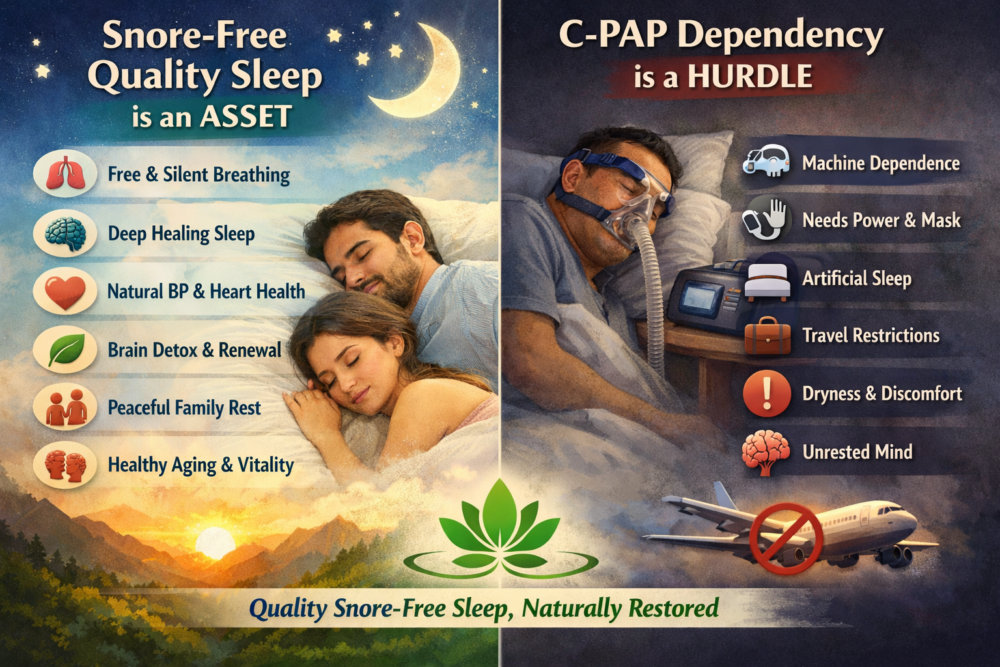
Snore-Free Healing Sleep — Ayurveda’s Path to Deep Non-REM Rest
Sleep is asset not luxury

Dr. Satish’s Unique Ayurvedic Management Approach

Dr. Satish’s Unique Ayurvedic Management Approach

Dr. Satish Sawale as a trusted Ayurvedic specialist, while clearly differentiating Ksharsutra therapy from laser surgery. The language is patient-friendly, authoritative, and suitable for website, blog, or Google local ranking.
To start your personalized 21-day liver detox in Navi Mumbai’s Nerul area, contact Dnyan Raj’s True Health Care and schedule a consultation with Dr. Satish Sawale.

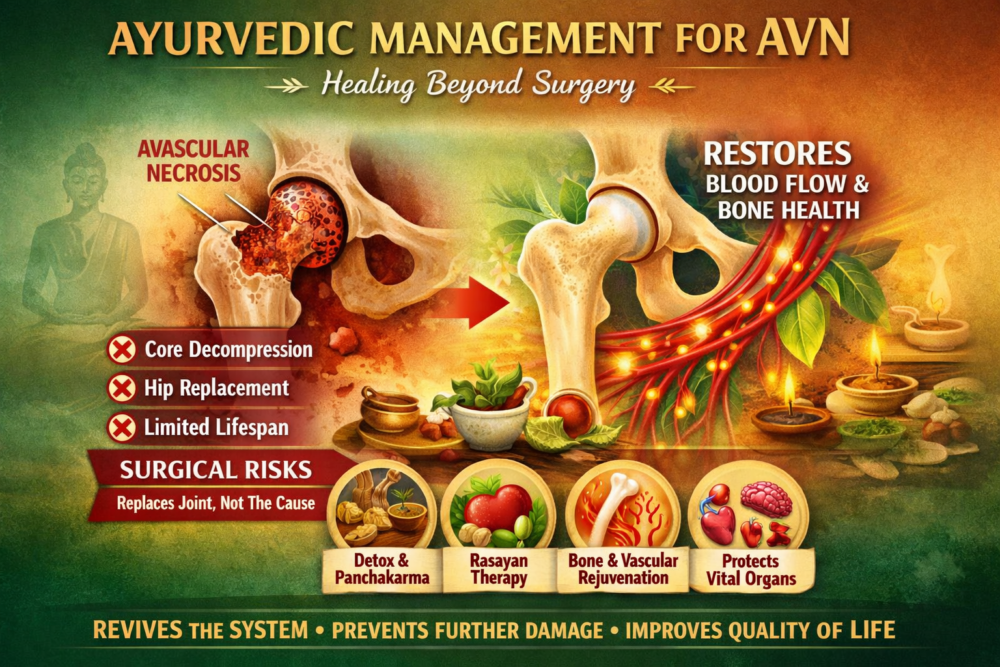
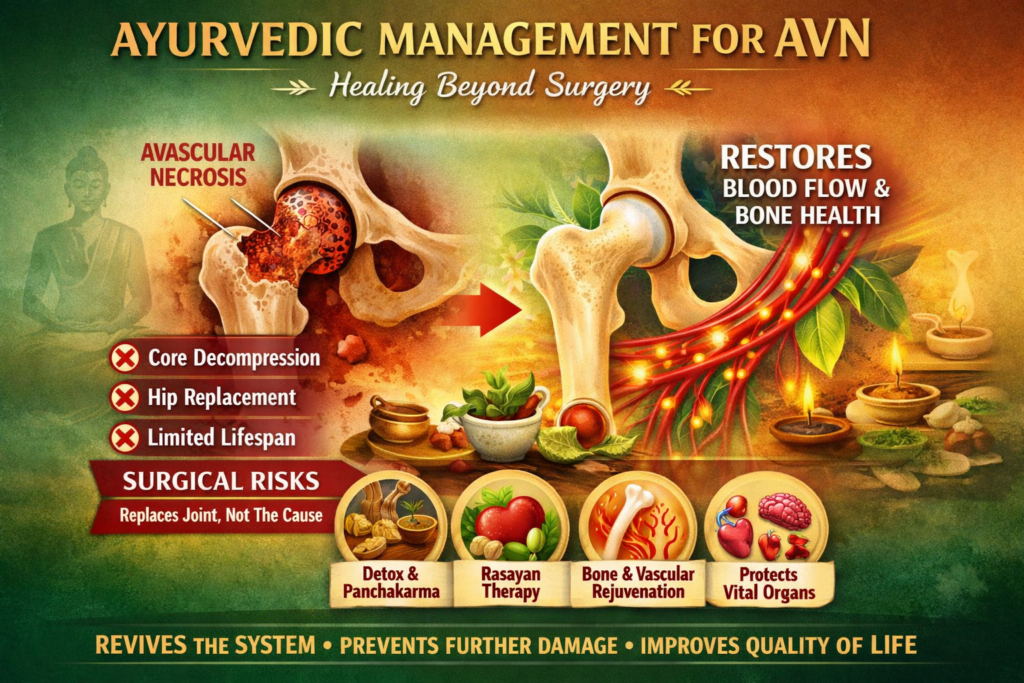
Avascular Necrosis (AVN) is a progressive bone disorder caused primarily due to compromised blood supply to bone tissue, most commonly affecting the femoral head of the hip joint. As blood circulation reduces, bone cells gradually die, leading to structural collapse, severe pain, restricted mobility, and eventual joint degeneration.
What makes AVN especially concerning is that it predominantly affects individuals in their productive age group (25–50 years)—professionals, working adults, and active individuals—often resulting in long-term disability if not addressed early.
While modern medicine largely focuses on surgical correction, Ayurveda offers a comprehensive, vessel-centric, tissue-rejuvenating approach that works at the root cause.
Ayurveda does not view AVN merely as a bone disease.
It is understood as a complex pathology involving:
Thus, AVN is not isolated to the hip alone—it reflects systemic vascular and metabolic compromise.
Conventional management often includes:
Although surgery may provide structural relief, it has important concerns:
Surgery treats the end stage, not the disease process.
Ayurveda offers a distinct advantage by addressing the health of blood vessels and tissue nutrition, which is the core pathology in AVN.
Customized Panchakarma therapies help remove deep-seated blockages from micro-channels:
This step is crucial in halting further necrosis.
Rasayan therapy is the backbone of Ayurvedic AVN management.
It focuses on:
Important Rasayan actions include:
Unlike painkillers, Rasayan works at a cellular level.
Classical Ayurvedic formulations are selected based on stage, cause, and constitution:
When used judiciously, they are safe, effective, and long-term supportive.
These help reduce pain, stiffness, and improve joint mobility naturally.
One of Ayurveda’s greatest strengths is its preventive vision.
AVN reflects systemic vascular weakness, which—if ignored—may later affect:
Ayurvedic therapy strengthens entire vascular health, not just the affected joint—thereby preventing future complications.
Ayurvedic treatment shows best outcomes in:
Even in advanced stages, Ayurveda helps in pain control, slowing degeneration, and improving quality of life.
AVN is not merely a bone problem—it is a blood vessel disorder leading to bone death.
Where surgery replaces the joint,
Ayurveda revives the system.
Through:
Ayurveda offers a scientific, holistic, and sustainable solution, especially crucial for individuals in their productive years who wish to avoid early joint replacement.
With timely intervention and expert guidance, progression can be controlled, function preserved, and life restored with confidence.
Read more
Aging is a sacred phase of life—meant to unfold with dignity, clarity, and emotional peace. Yet conditions such as Alzheimer’s disease and dementia often challenge this natural journey, affecting memory, orientation, confidence, and independence. These disorders do not impact only the individual; they touch entire families emotionally, physically, and socially.
While modern medicine focuses largely on symptom control and disease progression, Ayurveda offers a deeper, more humane dimension of care—supporting not only the brain, but the entire system that sustains cognition, emotions, and vitality.
At Dnyan Raj’s TRUE HEALTH CARE, Nerul, Ayurvedic Dr. Satish Sawale provides structured, compassionate, and individualized Ayurvedic management aimed at enabling graceful, more independent aging, even in neurodegenerative conditions.
Ayurveda describes memory and cognitive decline under classical concepts such as:
With advancing age, Vata naturally increases, leading to dryness, degeneration, instability of thoughts, disturbed sleep, fear, anxiety, and confusion.
Thus, Ayurveda does not isolate dementia as only a brain disorder—it understands it as a systemic depletion of nourishment, circulation, and vitality affecting the mind–body axis.
Rather than suppressing symptoms, Ayurvedic therapy works at foundational levels:
This integrated approach often results in meaningful improvements in daily functioning—an outcome of immense value to both patients and caregivers.
Under the clinical guidance of Dr. Satish Sawale, therapies are personalized based on age, disease stage, physical strength, and associated illnesses.
Classical formulations using Brahmi, Shankhpushpi, Mandukaparni, Guduchi, and Ashwagandha support cognition, memory, emotional calmness, and neural nourishment.
These therapies often bring improvement in sleep, agitation, anxiety, appetite, and emotional stability.
Correcting digestion reduces toxin accumulation (Ama), improves nutrient assimilation, and indirectly strengthens brain function—an often-overlooked yet vital step.
Structured routines, warm diets, oil application, gentle stimulation, and proper sleep cycles create predictability—essential for cognitive stability in the elderly.
In every civilization, elders have been the silent pillars of balance and continuity. Aging should never be perceived as a burden—it represents a living reservoir of wisdom, experience, and emotional intelligence.
Senior citizens contribute:
Within families, elders often become the anchors of harmony, helping navigate conflicts with compassion and clarity. Their presence fosters emotional security, cultural continuity, and moral grounding for younger generations.
From a national perspective, an aging population is not a liability—it is a social asset. When supported physically and cognitively, seniors continue to serve as mentors, advisors, caregivers, and ethical compasses.
Ayurveda honors this philosophy profoundly. By preserving mental clarity, emotional balance, and independence, Ayurvedic care does not merely support individuals—it protects wisdom itself, ensuring that families and society continue to benefit from the calm strength of their elders.
Though Alzheimer’s and dementia are progressive conditions, Ayurvedic care focuses on quality of life and functional stability, not unrealistic promises.
Patients under sustained Ayurvedic management often experience:
These improvements bring emotional relief and restore dignity in everyday living.
Ayurveda teaches that aging should be graceful, not fearful.
Independence is not merely about perfect memory—it is about peace of mind, emotional stability, meaningful relationships, and preserved self-respect.
This philosophy forms the foundation of care at Dnyan Raj’s TRUE HEALTH CARE, Nerul.
Ayurvedic Dr. Satish Sawale brings together:
Each patient receives an individualized roadmap—because every mind, every age, and every journey is unique.
Caring for someone with dementia requires patience, understanding, and support. With the right guidance, it is possible to restore calmness, comfort, and dignity to daily life.
Ayurveda may not promise miracles—but it consistently offers hope, stability, and humane care.
Read moreFor those seeking holistic well-being, mental clarity, and long-term vitality, Ayurvedic care under Dr. Satish Sawale at Dnyan Raj’s TRUE HEALTH CARE, Nerul, Navi Mumbai, provides authentic guidance rooted in classical wisdom and modern clinical understanding.

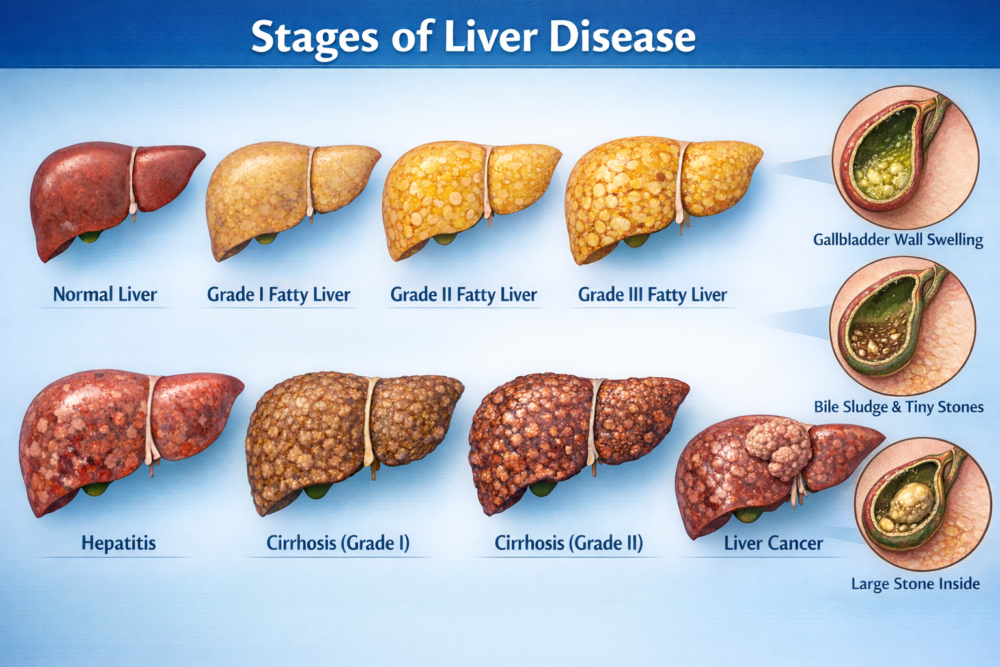
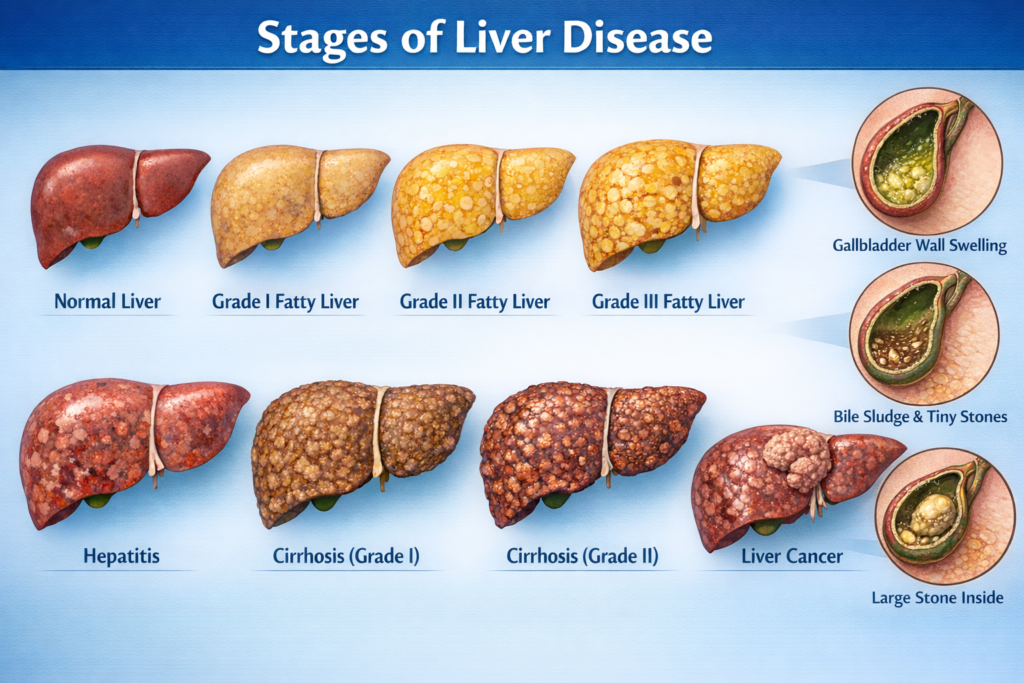
Fatty liver disease is increasingly common, especially among urban populations facing lifestyle stress, poor diets, and metabolic imbalance. Ayurveda offers a safe, natural liver detox approach that supports liver function, reduces fat accumulation, and restores metabolic harmony.
At Dnyan Raj’s True Health Care in Nerul, Navi Mumbai, Dr. Satish Sawale guides patients through a 21-day liver detox program rooted in classical Ayurvedic principles and modern lifestyle science.
Fatty liver (Steatosis) occurs when fat builds up in liver cells. Over time, this can lead to inflammation, fibrosis, and impaired liver function. Detoxing the liver helps clear metabolic toxins, rebalance digestion, and improve fat metabolism.
Common symptoms include:
Without intervention, fatty liver can progress. A structured, holistic detox can reverse early stages and support long-term liver health.
Ayurveda addresses the root causes of imbalance rather than just symptoms. According to Ayurvedic physiology:
Ayurveda combines diet, herbal support, lifestyle practices, and cleansing routines tailored to individual dosha types.
This program has three phases:
Each phase is customized to the individual based on health history, dosha evaluation, and lab parameters.
Under Dr. Satish Sawale’s guidance, herbs are selected to support liver cleansing and fat metabolism:
This structured detox protocol can:
Patients in Nerul, Navi Mumbai have experienced improved lab markers, sustained weight loss, and enhanced well-being under Dr. Satish Sawale’s supervision.
This program is suitable for adults with:
Not recommended without professional supervision in cases of advanced liver disease, pregnancy, or serious comorbid conditions.
Dr. Satish Sawale, an experienced Ayurvedic physician based in Nerul, Navi Mumbai, specializes in metabolic health, detoxification, and chronic disease management through Ayurveda.
Dnyan Raj’s True Health Care offers individualized protocols, clinical assessments, and ongoing support to help patients achieve long-term health and liver balance.
To start your personalized 21-day liver detox in Navi Mumbai’s Nerul area, contact Dnyan Raj’s True Health Care and schedule a consultation with Dr. Satish Sawale.
Read moreConstipation is not merely the absence of daily bowel movement. In Ayurveda, it is a Vata-dominant disorder involving impaired Apana Vayu, weakened Agni (digestive fire), disturbed gut motility, and emotional stress factors.
Modern lifestyle, hormonal transitions, dietary errors, suppressed natural urges, irregular sleep, and chronic stress have made constipation a common yet underestimated root cause of multiple diseases.
At Dnyan Raj’s TRUE Health Care, Nerul, Ayurvedic physician Dr. Satish Sawale offers individualized, safe, and long-term non-habit forming solutions for constipation across all life stages—without dependency on laxatives.
Ayurveda strongly emphasizes that the cause of constipation varies with age, physiology, hormones, occupation, and mental stress. Hence, one medicine cannot fit all.
Below is how constipation manifests differently in each population—and how it is successfully managed under expert Ayurvedic supervision.
Dr. Satish Sawale’s experience ensures complete safety during pregnancy.
Children have immature Agni. Forceful medicines disturb growth.
Gentle, safe, and non-habit forming management is the hallmark at TRUE Health Care.
Ayurveda views this as Vata–Pitta imbalance with Mandagni.
Treatment includes:
This also helps prevent future IBS, piles, and acidity.
Often ignored but very common due to:
Ayurveda addresses:
Many couples report improvement not only in bowel habits but also in energy, mood, and overall vitality.
Ayurvedic focus:
This group requires robust yet nourishing Ayurvedic planning, expertly handled by Dr. Satish Sawale.
Common in:
Root causes:
Ayurvedic diagnosis:
“Manasika Nidana causing Vata prakopa in Pakwashaya”
Treatment includes:
Result: Regular bowels without laxatives.
Very common in Navi Mumbai IT professionals.
Ayurveda calls this Kala Viparyaya Janya Agni Dushti.
Management includes:
This specialized approach makes TRUE Health Care a trusted clinic for IT professionals in Nerul.
Ayurvedic objectives:
Safe, nourishing, and age-appropriate care is essential—and this is where experience matters most.
Constipation is extremely common yet deeply distressing in patients who have recently undergone hospitalization, major illness, surgery, chemotherapy, or radiation therapy.
In such cases, constipation is not isolated—it reflects systemic weakness, tissue depletion, and disturbed physiological intelligence of the body.
From an Ayurvedic standpoint, this condition involves:
Ayurveda classifies this as:
“Bala-hani, Agni-nasha and Apana Vata avarodha following Shodhana-like insult.”
This category requires extreme clinical maturity and therapeutic restraint.
Common contributing factors:
Patients often suffer from:
Radiation causes:
This constipation is often associated with:
Under the guidance of Dr. Satish Sawale, constipation during or after cancer treatment is addressed with utmost safety, compassion, and customization.
Treatment objectives include:
No aggressive Panchakarma.
No strong purgatives.
No herb–drug conflict.
Only supportive, stage-appropriate, integrative Ayurvedic care.
Once the active chemotherapy or radiation cycle stabilizes, Rasayana-based Ayurvedic support helps:
This approach supports the patient’s strength while respecting modern oncology protocols.
Unlike temporary laxatives, Ayurveda:
Adds tone to Gut muscles
Constipation relief is not forced—it becomes natural and effortless.
Read more